A camel ride at the pyramids of Giza is worth it, as long as you take the right ride on the right animal
A camel ride at the pyramids of Giza is worth it, as long as you take the right ride on the right animal
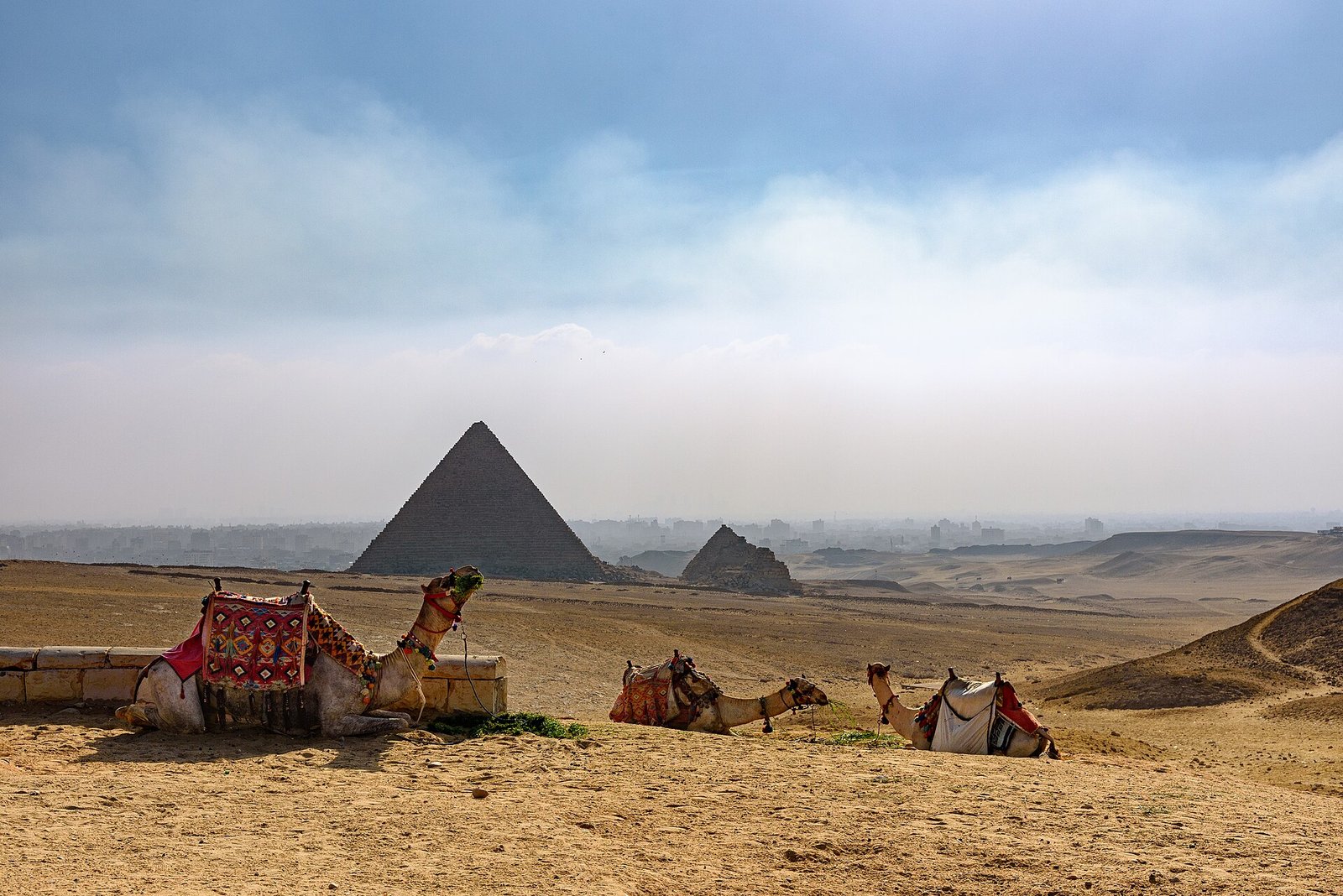
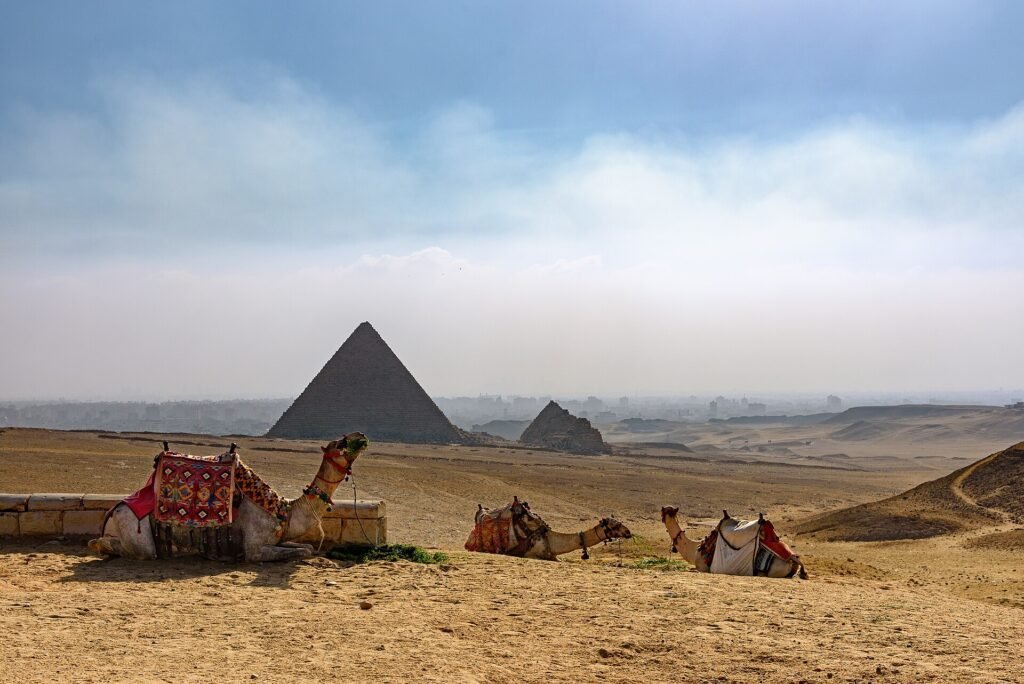
Yes, a camel ride at the pyramids is worth doing, but only one version of it. Skip the five-minute loop beside the Great Pyramid that a handler talks you onto at the gate. Take the longer ride out to the panorama point on the southern edge of the plateau, where all three pyramids line up in one frame and the city disappears behind them. Do it in the first hour after opening or the last before closing, on an animal that looks fed and rested, with everything settled before anyone touches the saddle. Arranged by your guide inside the Giza visit, it is calm and the photo is the one you came for. Arranged at the gate, it is the story people tell about getting fleeced.
Is a camel ride at the pyramids actually worth it?
Honest answer from someone who has watched hundreds of travelers do it: yes, and most people who call it a waste took the wrong ride. Two very different products are sold under the same name at Giza, and the one pushed hardest is the one to refuse.
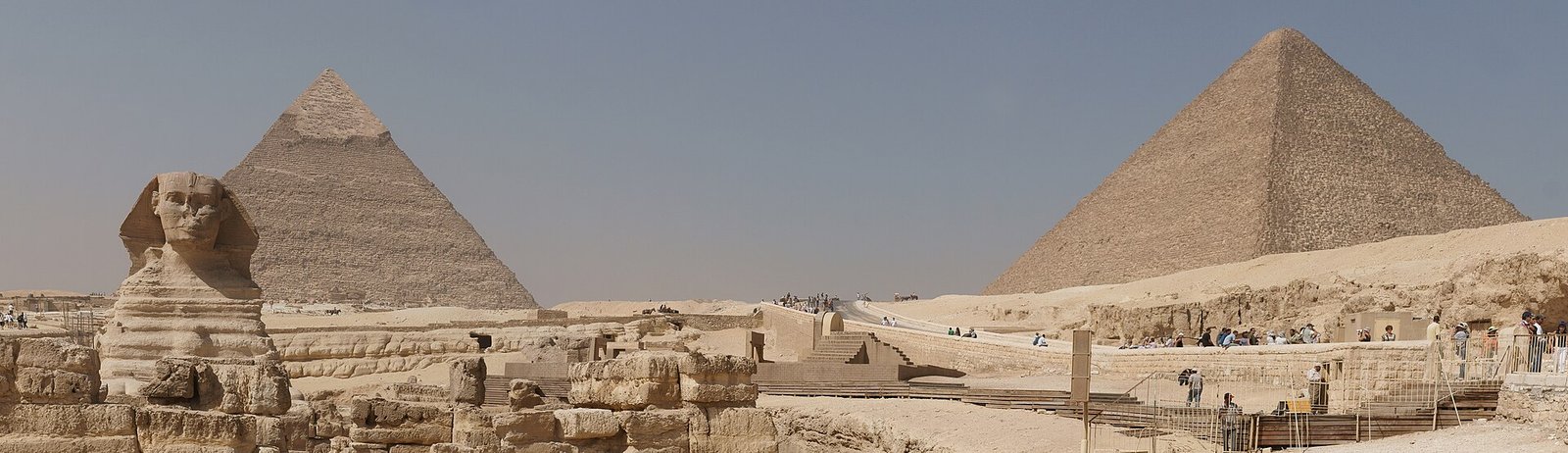
The right ride takes you away from the crowds, across open sand, to a rise where Khufu, Khafre and Menkaure stand in a row with nothing in front of them. From the saddle you see over the parked buses and the tour groups, and for half an hour the plateau feels like the desert it is. That is the memory.
The wrong ride is a short loop in the dust beside the Great Pyramid that ends before you have found your balance. It is a transaction, not a ride.
So the question is which ride, at what hour, on which animal, and who settled the terms. Our guide to the pyramids of Giza covers the monuments; this page is only about the camel.
The short ride and the panorama-point ride, compared
Every handler offers both, rarely by these names.
| What you get | Short ride by the Great Pyramid | Panorama-point ride |
|---|---|---|
| Where it goes | A loop of a few hundred yards on the flat ground near Khufu or the Sphinx | Across the sand to the viewpoint on the southern ridge, then back or on to the Sphinx |
| Time in the saddle | Five to ten minutes | Thirty to sixty minutes |
| The view | One pyramid, very close, with buses in the frame | All three pyramids in a line with open desert in front |
| Who sells it | Handlers at the gates and parking areas | Established stables, booked through a guide or agency |
| How the terms are set | Vague, often changed after you dismount | Fixed in advance as part of the visit |
| Best for | Nobody, honestly | Anyone who wants the ride and the photo |
A longer variant rides up from the village stables of Nazlet El Samman, an hour or more, for confident riders and sunrise seekers. For a first visit, the panorama-point ride is the sweet spot.
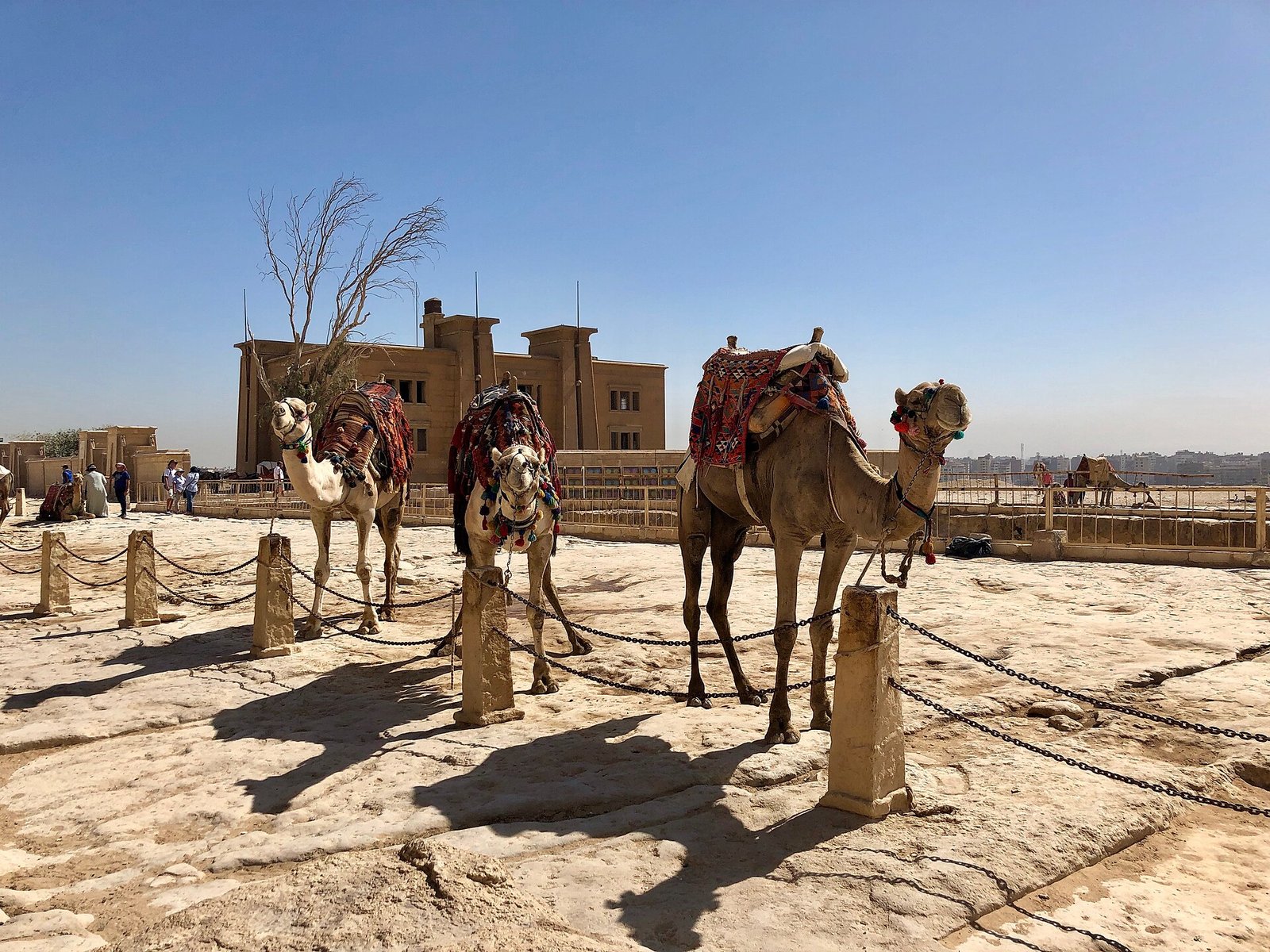
How the plateau scams work
Giza has a deserved reputation for hustle, and the camel is the center of it. Nearly every bad story follows one of four scripts, and a script you recognize is one you can walk away from.
- The moving number. A very low figure is agreed at the start. At the end it turns out to have been per person, or one way, or for the camel but not the handler.
- The hostage dismount. You are helped up cheerfully, ridden a short way out, and then told that getting down is a separate service. Seven feet up is the worst place to negotiate anything.
- The mandatory tip. A gratuity is demanded as if it were a fee, sometimes for a second man who appeared halfway through to hold the rope. A small thank-you for a good ride is normal, but it is never a condition of being let off the camel. Our guide to tipping in Egypt separates custom from pressure.
- The free gift. A headscarf is wrapped around your head for the photo or a souvenir pressed into your hand. Once accepted, it has a price. Decline with a smile before it touches you.
None of this involves any threat. The sellers are persistent, not aggressive, and a firm no plus continued walking works every time. What makes the scripts effective is timing: the deal is closed after you are off the ground. Anyone who tells you the pyramids are closed today is steering you to a stable.
How a guide-arranged ride avoids every one of them
The handlers' method depends on you being alone, on foot and unsure of the customs. A guide removes all three conditions at once, which is why we build the ride into the Giza visit rather than leaving it to the gate.
The stable is one we use every week, so the owner has a name to protect with us, not a stranger to squeeze once. The route and time in the saddle are agreed in advance and settled as part of your day, so there is no number to argue about on the sand and no dismount conversation at all. Your guide stands at the mounting block and is waiting at the end.
If you arrange it yourself, the rules are simple: settle the total for everyone, round trip, including the dismount, before you go near the animal; ask plainly whether a tip is expected on top; carry small bills, because a lack of change is a tactic; pay at the end; and if you are hoisted up before the terms are clear, ask to get down. The rules of haggling in Egypt apply here more than anywhere.
Animal welfare: how to pick a well-kept camel in thirty seconds
This is the part that decides whether the ride is defensible, and you can judge it yourself before you climb on. Conditions vary from good to bad within a hundred yards, and the most useful thing a visitor can do is refuse the bad ones.
Signs of a well-kept animal
- The hump is firm and upright. A hump sagging to one side is the classic sign of an underfed or exhausted camel.
- No raw patches or bare skin under the saddle, on the knees or around the nose rope.
- Clear eyes, no discharge, no crust of flies at the corners.
- Water within reach and shade where the animals wait between rides.
- The nose rope hangs slack and the head moves freely.
- The camel kneels and rises on a spoken command, without a stick.
A stick used to make the animal rise, camels tied in full sun for hours without water, a crooked saddle over a sore back, or an animal that flinches from its own handler: any of these means walk to another stable.
Camels do grumble. A healthy one bellows when asked to kneel, and that is theatre, not pain. Watch the body: hump, skin, eyes, the way it moves. The stables we use pass this look every time, and if one stopped passing it we would stop using it.
Mounting and dismounting without the lurch
Nobody needs riding experience. The handler leads the animal and you sit. The only moments that catch people out are the stand-up and the kneel-down, and both are easy once you know what the camel is about to do.
- Getting on. The camel is kneeling. Swing a leg over, sit well back, and take the front pommel with both hands.
- The stand-up. A camel rises back legs first, which pitches you forward hard. Before the handler gives the word, lean back and keep your weight low. Then the front legs come up and you are pitched back the other way. Two jolts, then it is over.
- The walk. A slow rolling sway. Relax your hips, let the saddle move under you, and keep one hand on the pommel until you are comfortable.
- The kneel-down. The reverse: front legs fold first, then the back. Lean back, hold on, and wait until the animal is fully down before you swing off.
Never try to dismount while the camel is standing, and keep your hands away from the mouth; camels bite when annoyed. You do not steer. You are a passenger, and if you want to control your own animal, that is what the horse is for.
What to wear and what to bring
Dress for a hot, dusty saddle, not for the photo. The photo works fine in practical clothes; the ride does not work in the wrong ones.
- Long lightweight pants. The saddle blanket rubs bare thighs raw within minutes. Shorts are the most common regret.
- Closed shoes. Sneakers or light hikers. Flip-flops fall off during the stand-up.
- A brimmed hat with a cord, or a scarf. There is no shade on the ridge, and a loose cap flies off at the first jolt.
- Sunglasses and sunscreen. The sand reflects, so reapply before you mount.
- A small bottle of water in a pocket or a zipped cross-body bag worn in front. A backpack swings and unbalances you on the rise; leave it with the guide.
Close-fitting layers in light colors are the right call, and our guide to what to wear in Egypt covers the rest of the trip. In summer the open sand at midday sits well above 100°F (38°C); in winter, mornings can start cool enough for a light jacket you shed by ten.
Getting the photo you came for
The camel photo at Giza is a cliche because it is a great photo. The planning is mostly about where the camera is, not where the camel is.
- Shoot from the panorama point, not beside the pyramid. Close to Khufu the blocks fill the frame and the sky disappears. From the southern ridge the three pyramids sit in a line behind the rider, small enough to fit and big enough to matter.
- Put the camera low. Have your guide crouch. A rider shot from below, against the sky, with the pyramids on the horizon, is the picture. From standing height the pyramids sink behind the hump.
- Mind the sun. Morning light comes from the east and lights the pyramid faces; late afternoon puts the sun behind them for silhouettes.
Rules about cameras and drones on the plateau change from time to time; our page on photography and camera rules in Egypt keeps track.
Kids, older travelers, and the horse and carriage alternatives
The camel is the ride most people picture, but the plateau offers two other ways to cover the same ground, and for some travelers they are the better choice.
Children
Small children should not ride alone. The saddle is high, the stand-up is abrupt, and a five-year-old has no way to brace. The usual arrangement is one adult and one small child sharing a saddle, or the family taking a carriage. From about ten or eleven, a child can generally handle their own camel with the handler at the head. There is more on planning days with children in our family travel guide to Egypt.
Older travelers and bad backs, hips or knees
The two jolts are the issue, not the ride. Anyone with a recent hip or knee replacement, a bad lower back or a fear of heights should take the horse-drawn carriage. It reaches the same panorama point on the paved road and the view is identical. Very limited mobility is better served by staying in the vehicle, which reaches the viewpoint road directly.
Horse
A horse is faster, lower, easier to mount and easier on the back once moving. It is the choice for anyone who has ridden before or wants a sunrise ride from the village, and it needs a little more confidence, because you are steering. The camel remains the animal that feels like Egypt.
The best light and the best hour
Time of day changes this experience more than anything else you control.
First hour after opening. The plateau is nearly empty, the sand is cool, the animals are fresh, and the low sun from the east lights the pyramids evenly from the panorama point. This is the slot we plan around.
Last hour before closing. Warm, long light, the sun sinking behind the pyramids for silhouettes, and thinner crowds. The trade-off is that the animals have worked all day, so look harder at the one you are given.
Midday. Avoid it. The sand radiates heat, the light is flat and white, and the animals are standing in the worst of it. If midday is your only window, take the carriage or walk.
Sunrise from the village. Some stables run early rides that climb onto the plateau as the sun comes up behind Cairo. It needs an early alarm and a confident seat, and it is unforgettable. Ask us if it is what you want. Whatever the month, the first and last hours are the ride.
How Explora Egipto builds the ride into your Giza visit
We are a local agency in Cairo with our own guides and vehicles, and we arrange the camel ride inside the Giza morning rather than as something you go and find.
Your guide meets you at the hotel early enough to be at the gate for opening. You walk the Great Pyramid first, while the air is cool, and go inside it if you have chosen to. Then, instead of driving to the panorama point, you ride. The guide takes you to the stable we use, checks the animals, gets you mounted, and meets you at the viewpoint with the camera ready. From the ridge you ride down toward the Sphinx, and the visit continues to the Sphinx and the valley temple.
Nothing about the ride is discussed on the sand. The only decision you make on the plateau is which camel looks handsomest, and if one of you wants the horse, another the carriage and a third to walk, we set it up that way.
The Giza morning fits inside any of our Cairo excursions and every multi-day trip that starts in the capital. Tell us your dates and we send you the plan with the ride written in.
Frequently asked questions
How long is a camel ride at the pyramids?
The ride worth taking, out to the panorama point on the southern ridge and back, keeps you in the saddle for thirty to sixty minutes depending on whether you continue down to the Sphinx. The short loop at the gates lasts five to ten minutes; sunrise rides from the village run an hour or more.
Is it safe to ride a camel at Giza?
Yes for almost everyone. The handler leads the animal the whole way, the pace is a walk, and the only moments that need attention are the stand-up and the kneel-down, when you lean back and hold the pommel. Recent hip or knee surgery, a bad back or a fear of heights point you to the carriage instead.
Is riding a camel at the pyramids ethical?
It can be, and the difference is the stable. A well-kept camel has a firm upright hump, no sores under the saddle, clear eyes, water and shade nearby, and rises without a stick. Choose one that passes that look, refuse one that does not, and say why. Booking through a guide who uses the same stables every week makes that pressure count.
How do I avoid being scammed on a camel ride at the pyramids?
Settle everything before you go near the animal: the total for everyone, round trip, including the dismount, and whether a tip is expected on top. Carry small bills, pay at the end, and if you are helped up before the terms are clear, ask to get down. Decline any gift offered for the photo. Simplest of all is a ride arranged by your guide, where nothing is negotiated on the sand.
What is the best time of day for a camel ride at Giza?
The first hour after the site opens, when the plateau is quiet, the sand is cool, the animals are fresh and the low eastern light falls on the pyramids from the panorama point. The last hour before closing is the second choice, with warm light and silhouettes. Midday is the worst for you, the animal and the photographs.
Can children ride a camel at the pyramids?
Yes, with an adult. Small children share a saddle with a parent, sitting in front and held, or the family takes a carriage to the same viewpoint. From about ten or eleven, a child who wants their own camel can usually manage it with the handler at the head. Tell us the ages and we set the day up accordingly.
Take the ride the plateau is famous for, minus the story people warn you about
Tell us your dates, who is traveling and whether you want camel, horse or carriage, and we come back with your Giza morning planned around opening time, the ride to the panorama point written in and the stable chosen. No prices on this page, just a quote in your inbox.